
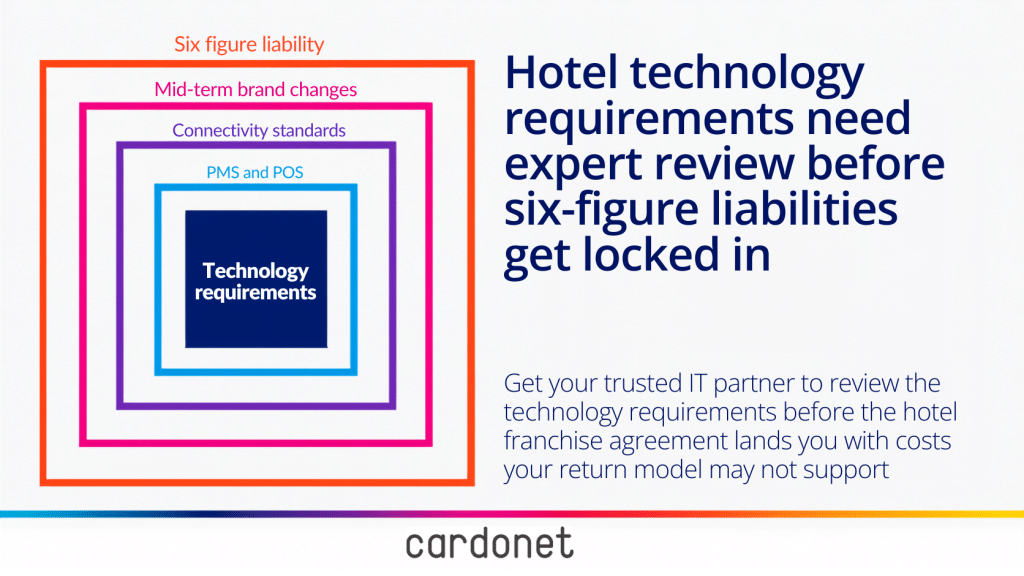
Your deal team reads the fee schedule line by line. The technology exhibit usually gets skimmed because it looks like an engineering document, even though it can commit your property to six-figure system costs.
Before you sign a hotel franchise agreement, have someone who has delivered hotel IT read the technology exhibit. It names the property management system (PMS), point of sale (POS) platform, connectivity standards and loyalty integration you must run, and those systems will run your property long after the deal team has moved on.
Lawyers negotiate fees, term length, exclusivity radius and exit clauses, because that is where legal and financial diligence looks for risk. The technology section, or the operating manual it points to, gets far less attention. If nobody prices the systems it names before signature, they arrive later as costs nobody planned for.
The Exhibit That Gets Skimmed
The question most likely to be missed is compatibility. Will the newly mandated PMS talk to the POS your property already runs? Does the connectivity spec match the network already in the building, and what is a converting property carrying over from its previous flag?
None of these is a legal or financial question, so a standard legal or financial review has no natural way to catch them. The gap usually surfaces once integration is under way, when the agreement is signed and nothing is left to negotiate.
Brands also reserve the right to update required systems during the agreement, and you pay when they do. That right is usually written into the operating manual in plain language, where anyone on the deal team could find it. Because the manual is filed as an engineering document, it rarely gets the review your fee schedule gets.
The Agreement Is Three Documents
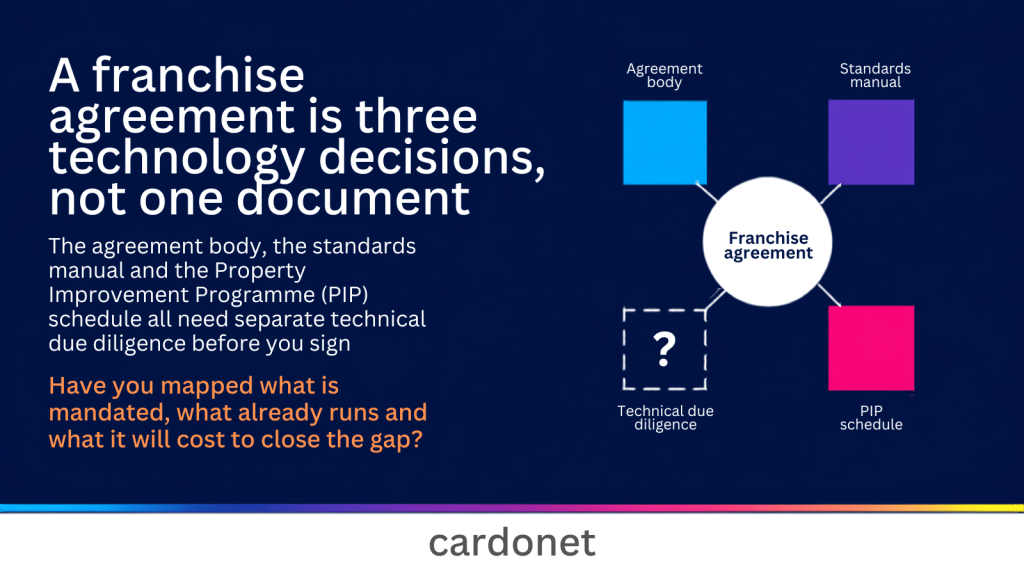
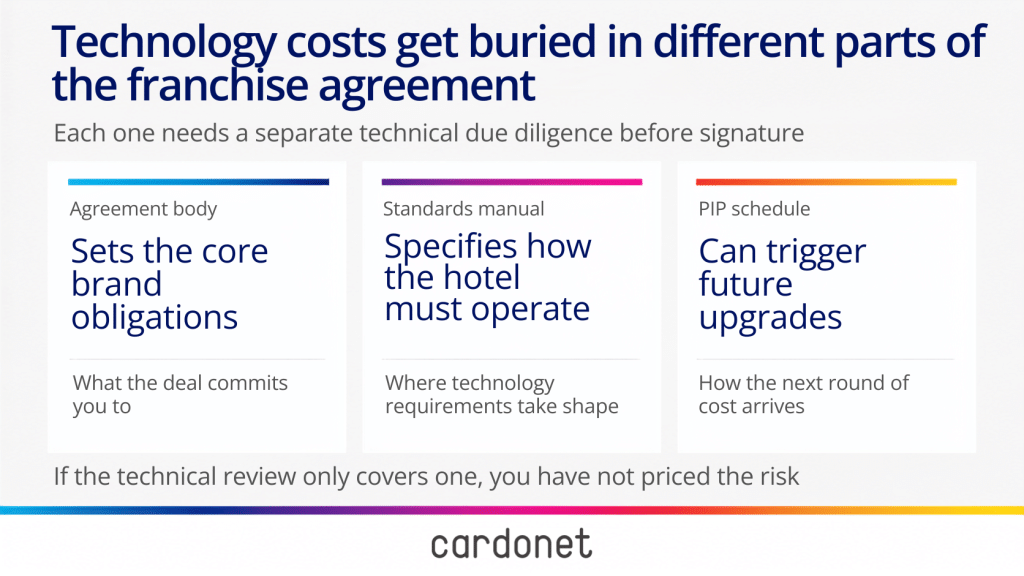
In practice a franchise agreement is three documents, and each one carries a different part of your technology exposure.
The agreement body sets the commercial terms: fees, term and territory. Alongside it, the brand standards manual sets the mandated systems, including PMS, POS, WiFi and loyalty-platform integration, plus the certification process for approved vendors. The Property Improvement Plan (PIP) schedule sets when those mandates get revisited, which is how brands most often force a technology refresh partway through the term.
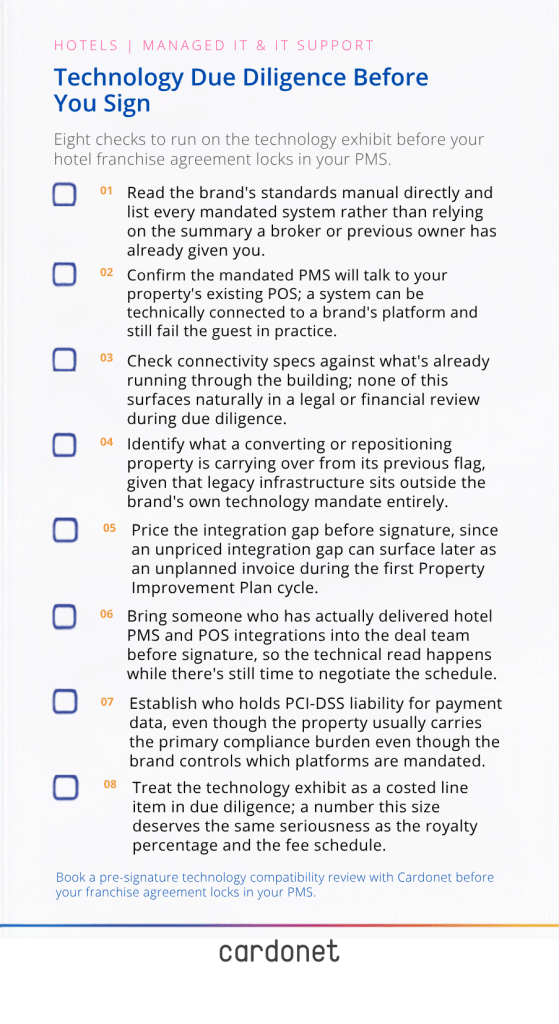
Your technology diligence comes down to three questions:
- What does the IT standards manual mandate, read directly rather than described by a broker?
- What does the property already run, including anything a converting or repositioning hotel inherits from a previous operator?
- Where is the integration gap between those two answers, and what does it cost as a figure in the deal model?
One hospitality technology vendor’s analysis of hotel data makes the same point about PMS and POS. Two systems linked through a software connection can look integrated while holding separate, inconsistent copies of the same guest record. A booking, a room change or a payment can then pass between them and still land wrong at the front desk, which is the gap the third question is there to catch.
When you run a review against those three questions, the integration cost goes into the deal model as a figure. If you skip it, that cost tends to arrive as an unplanned invoice during the first PIP cycle.
Who Is in the Room
Your negotiating team forms around the deal. Ownership brings the capital, legal reads the clauses and finance models the numbers, because the contract calls for each of those functions. Nobody in that line-up is there to ask whether the mandated systems will work together.
Fee structures and exit clauses get the scrutiny because their risk is visible during negotiation. Technology risk stays hidden until someone has to make the mandated systems work on a live property, with guests checking in and your front desk team learning a new system on the job.
A virtual IT director fills that seat when you bring them into the deal team before signature. At Cardonet, that means someone who has delivered hotel PMS and POS integrations sits alongside legal and finance while the schedule is still open. Our engineers have slept on site for days during hotel openings to get systems live, so we know what a mandate looks like once guests arrive.
At this stage, the job is to read the mandate as an operator would and put a cost and a risk against each clause. The migration itself comes later.
What the Mandate Costs
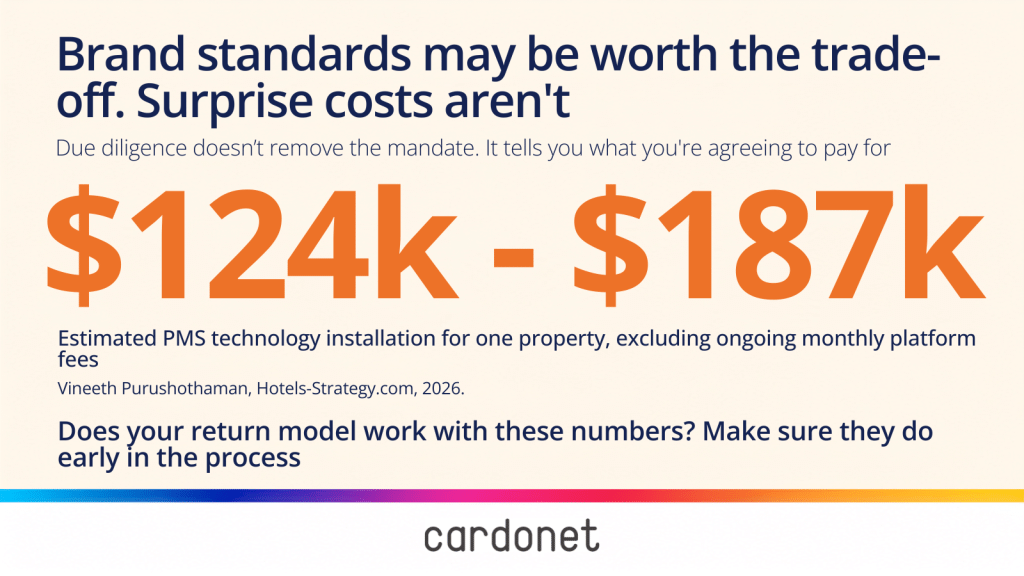
The figures are large enough that the technology exhibit belongs in the same diligence process as the fee schedule. One hospitality consultant’s analysis of major hotel brand economics estimates PMS installation at $124,000 to $187,000 USD for a single property under one global brand, before ongoing monthly platform fees.
The same analysis puts a different brand’s PIP requirements at $10,000 to $25,000 per room, or $940,000 or more for a typical property. Most of that cost comes from in-room and system technology refreshes, while cosmetic work makes up the smaller share. It puts total franchise fees across major brands at 10 to 12% of gross room revenue, with royalty fees alone usually 4 to 7%.
Once you sign, none of it is optional, and the cost arrives on the schedule the brand sets rather than the one in your deal model.
The exposure goes beyond installation. In my experience, the property carries most of the PCI DSS liability for card payment data, even when the brand decides which PMS and POS platforms you can use. Where the brand mandates or centrally hosts a system, some of the compliance scope moves back to the brand. Your property still holds the merchant account, files the assessment and carries the reputational damage if a system fails.
At these numbers, the technology exhibit belongs in the financial model next to the royalty percentage and the marketing contribution. It needs pricing with the same care before anyone signs.
Building Diligence Into the Timeline
Brand-mandated technology exists for good reasons. It keeps the guest experience consistent across a portfolio, and the strength of the brand is part of what you buy when you sign. If you push back hard on the technology schedule, or refuse standard mandates outright, you can lose more in brand support and marketing reach than you save on integration.
There is no formula for how hard to negotiate, so the decision has to be made property by property. Diligence will not remove that trade-off, although it will stop the cost arriving as a surprise.
Treat the technology exhibit as you treat the fee schedule. Read it line by line, check it against what your property runs today and price the gap before signature. Because a team that has run PMS migrations knows where the costs sit, it can usually answer the integration question inside the same window as legal and financial diligence.
If you are weighing a franchise agreement now, send us the brand’s IT standards manual and a list of the systems your property runs today. We will run a pre-signature IT audit, map the gap and price it while legal and finance are still working through the contract.
FAQs
What Technology Does a Hotel Franchise Agreement Mandate?
Most agreements point to a separate IT standards manual. It names the required PMS, POS platform, connectivity standards and loyalty-platform integration, plus an approved-vendor certification process. Brands can also update these requirements during the term, usually through Property Improvement Plan (PIP) cycles.
Who Should Review the Technology Exhibit Before Signature?
Someone who has delivered a hotel PMS or POS integration, brought into the deal team alongside legal and finance rather than after them. Because that person is missing from most negotiations, the integration cost usually surfaces only after signature.
How Much Can PMS Installation Cost Under a Franchise Agreement?
One hospitality consultant’s analysis of major hotel brand economics estimates PMS installation at $124,000 to $187,000 USD for a single property under one global brand, before ongoing monthly platform fees. PIP requirements are separate and can add $10,000 to $25,000 USD per room.
Who Is Responsible for PCI DSS Compliance When the Brand Mandates the Payment System?
The property usually carries most of the PCI DSS liability for card payment data, because it holds the merchant account. Where the brand mandates or centrally hosts a system, some compliance scope moves back to the brand, but the property still files the assessment and carries the reputational risk if a system fails.
What Does a Pre-Signature Technology Compatibility Review Check?
It compares what the IT standards manual mandates with what the property runs today, including anything inherited from a previous flag. It then prices the integration gap before signature, so the cost goes into the deal model rather than arriving as an unplanned invoice.
You must be logged in to post a comment.